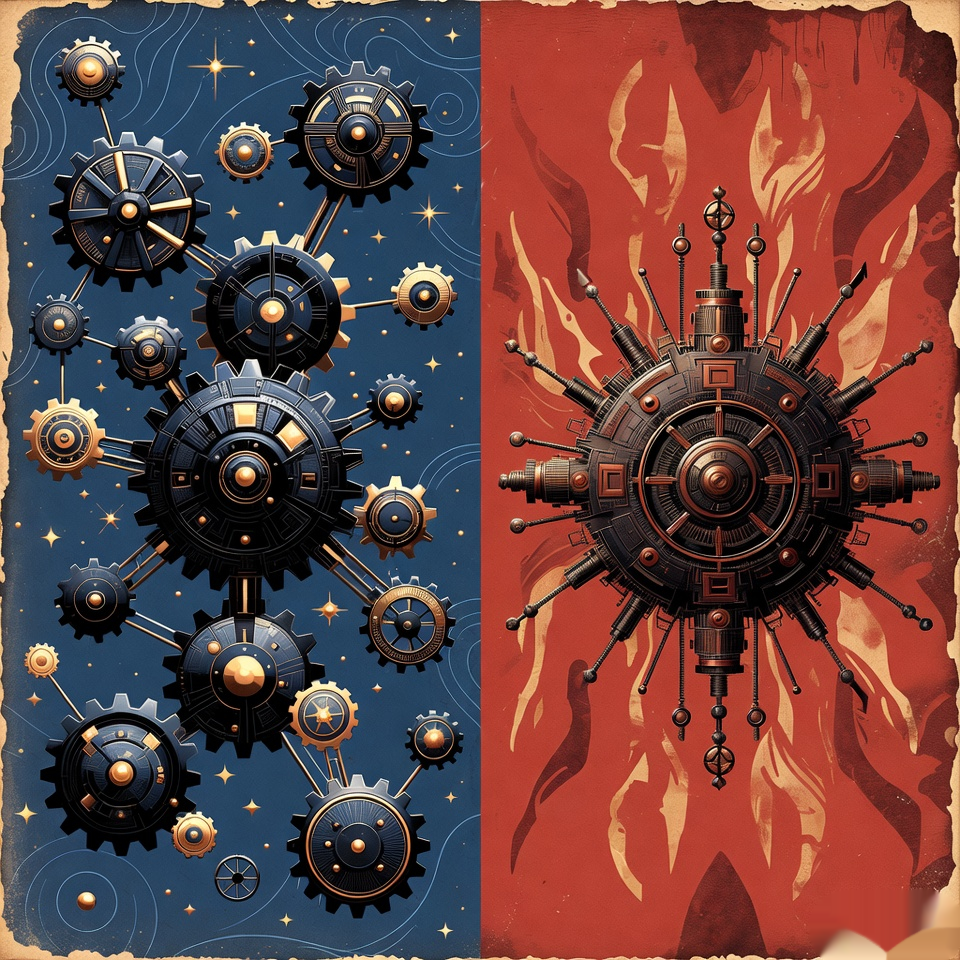
The agent boom has created a familiar pattern in AI teams. A company ships one capable agent with tools, memory, and guardrails. It works. Then complexity grows. Soon somebody says the obvious thing: split it into specialists. That is where the real engineering question starts. The choice between a single-agent system and a multi-agent system affects latency, cost, observability, reliability, and ultimately whether your AI product survives contact with real users.
The Real Engineering Question
The agent boom has created a familiar pattern in AI teams. A company ships one capable agent with tools, memory, and guardrails. It works. Then complexity grows — more tools, more workflows, more edge cases, more teams. Soon somebody says the obvious thing: split it into specialists.
That is where the real engineering question starts.
The choice between a single-agent system and a multi-agent system is not just an architectural preference. It affects latency, cost, observability, reliability, maintenance, evaluation, and ultimately whether your AI product survives contact with real users. The current research is especially useful here because it pushes back against the hype. Some of the strongest evidence now says multi-agent systems can be excellent for the right task shape, but worse for the wrong one.
In other words, architecture is not ideology. It is alignment between the task and the system.
Single-Agent vs Multi-Agent: What Each One Actually Is
What is a single-agent system?
A single-agent system is the simpler pattern. One model sits at the center of the workflow. It receives instructions, decides what to do, calls tools, loops until it reaches an exit condition, and returns a result. OpenAI's agent guidance describes this as a single model equipped with tools and instructions that executes workflows in a loop — and its practical recommendation is blunt: maximize a single agent's capabilities first, because it keeps complexity, evaluation, and maintenance more manageable.
Academic surveys define the same idea more broadly: one intelligent agent that perceives an environment, reasons, decides, and acts independently. Its biggest strengths are focus, efficiency, and simplicity. Because resources are concentrated in one agent, there is no need for inter-agent communication or coordination, which makes troubleshooting and optimization easier.
In practice, a strong single-agent system often includes:
- One orchestration loop
- One prompt stack or policy template
- Access to tools like search, CRM, SQL, code execution, or APIs
- Memory or state handling
- Layered guardrails
- Structured output checks
That is enough for a surprising number of production use cases — support automation, data retrieval, document processing, light research, and action-taking across a bounded toolset.
What is a multi-agent system?
A multi-agent system uses multiple coordinated agents instead of one. Each agent may have a role, a domain, a toolset, a prompt, or a stage of responsibility. Anthropic describes a multi-agent system as multiple agents — LLMs autonomously using tools in a loop — working together. In its production Research system, a lead agent plans the research process and creates parallel subagents to investigate different aspects of a question simultaneously.
OpenAI's practical guide divides multi-agent systems into two broad patterns. The first is the manager pattern, where a central agent coordinates specialized agents as tools. The second is decentralized handoff, where peer agents transfer control to one another based on specialization. Google's ADK documentation makes the software-engineering case directly: multi-agent systems offer modularity, specialization, reusability, maintainability, and more structured control flows.
The academic literature frames the promise even more ambitiously — multi-agent systems can harness collective intelligence, combining specialized perspectives and coordinated decision-making to tackle problems that exceed the practical limits of a single agent. But that same literature also stresses the cost: message passing, synchronization, coordination overhead, scaling issues, and new failure modes.
The Simple Mental Model
Concentrated intelligence
One brain, many tools. Fails mostly through bad reasoning, bad tool selection, context overload, hallucination, or weak guardrails.
Distributed intelligence
Many brains, explicit coordination. Fails through all of the above plus communication breakdowns, role confusion, duplication, coordination tax, fragmented context, and error propagation across agents.
The distinction sounds small. It is not — it changes the entire failure surface.
Where Each Architecture Wins — and Where It Fails
Why single-agent systems are still underrated
The market likes complexity because complexity looks advanced. Research and field experience keep saying the opposite. Anthropic says the most successful teams it worked with were not relying on highly elaborate frameworks — they were using simple, composable patterns. OpenAI says to maximize a single agent first and only evolve to multi-agent systems when needed. LangChain's documentation says the quiet part out loud: not every complex task requires multi-agent architecture, and a single agent with the right prompt and tools can often achieve similar results.
There are good reasons for that consensus.
1. Single-agent systems are easier to evaluate
One agent means one central policy surface. You can track inputs, outputs, tool calls, retries, failures, and guardrail triggers in a much cleaner loop. That makes test cases clearer and regressions easier to spot.
2. Single-agent systems are cheaper and faster by default
Every extra agent adds tokens, orchestration logic, more messages, more tool calls, and usually more wall-clock time. Sometimes parallelization offsets this — sometimes it does not. If the task is basically sequential, those extra hops often become pure overhead. Google's findings are stark: for sequential tasks like planning in PlanCraft, every multi-agent variant it tested reduced performance by 39 to 70 percent.
3. Frontier models are reducing the original argument for multi-agent designs
One reason multi-agent systems took off was that earlier models struggled with long context, memory retention, planning depth, and tool use. A 2025 empirical study comparing multi-agent and single-agent systems argues that these benefits diminish as model capability improves. Stronger models reduce many of the limitations that originally motivated multi-agent decomposition in the first place.
4. Single agents are better for tightly coupled reasoning
If a task depends on preserving a unified chain of context across many steps, splitting it across agents can fragment the very thing you need most. Google's research calls this the sequential penalty — the coordination process consumes cognitive budget and breaks reasoning continuity.
Why multi-agent systems still matter
None of that means multi-agent systems are hype. It means they are conditional tools.
When task structure favors decomposition, multi-agent systems can be very strong. Anthropic's production Research system is one of the clearest real-world examples. Its orchestrator-worker pattern let a lead agent spin up 3 to 5 subagents in parallel, while those subagents also used 3 or more tools in parallel. Anthropic says this cut research time by up to 90 percent for complex queries and allowed the system to cover more information in minutes instead of hours.
Google's controlled evaluation backs this up. On parallelizable tasks like financial reasoning, centralized multi-agent coordination improved performance by 80.9 percent over a single-agent baseline. That is not a rounding error — it is a task-shape effect. Distinct agents analyzing revenue trends, cost structures, and market comparisons simultaneously can beat one agent trying to do it serially.
Multi-agent systems also become attractive when the system itself is an organization. If different teams own different capabilities, if legal and operations require hard boundaries, if domain prompts are too large to merge cleanly, or if tool choice has become unreliable because one agent has too many tools, modularizing into agents can be the cleanest way forward.
For sequential tasks like planning in PlanCraft, every multi-agent variant tested reduced performance by 39 to 70 percent. On parallelizable financial reasoning tasks, centralized multi-agent coordination improved performance by 80.9 percent over a single-agent baseline.
The Strongest Current Research Signals
The most useful thing newer research has done is remove the false binary. The question is not "Are multi-agent systems better than single-agent systems?" The question is "For this task, with this model, under this latency and reliability budget, what architecture aligns best with the work?"
Three recent findings matter a lot.
1. More agents are not automatically better
Google Research's 2026 study examined 180 agent configurations and found that the "more agents" assumption often hits a ceiling and can even degrade performance. It also built a predictive model that identified the optimal coordination strategy for 87 percent of unseen task configurations — a big shift suggesting agent architecture can move from vibes to measurement.
2. Multi-agent gains shrink as models get better
The 2025 study "Single-agent or Multi-agent Systems? Why Not Both?" found that benefits of multi-agent systems diminish as frontier LLM capability improves. It also proposed a hybrid request-cascading design that improved accuracy by 1.1 to 12 percent while reducing deployment cost by up to 20 percent across several agentic applications. That hybrid result points toward a practical future: not single-agent everywhere, not multi-agent everywhere, but adaptive escalation.
3. In some high-stakes domains, agent systems add only marginal value
A 2026 npj Digital Medicine paper benchmarking agent systems for clinical decision tasks reported "marginal improvement" over baseline LLMs across the evaluated medical benchmarks. Adding agent structure on top of strong base models does not guarantee transformational gains, especially when the problem is already dominated by model quality, data quality, or evaluation difficulty.
The real comparison across six dimensions
| Dimension | Single-Agent System | Multi-Agent System |
|---|---|---|
| Best for | Bounded workflows, tight reasoning loops, low-latency tasks | Decomposable workflows, parallel research, domain specialization |
| Main strength | Simplicity and control | Specialization and scalable coordination |
| Main weakness | Context overload, tool overload, monolithic growth | Coordination overhead, error propagation, complexity |
| Evaluation | Easier | Harder |
| Cost | Usually lower at first | Often higher unless parallelism pays off |
| Latency | Usually lower on sequential tasks | Can be much lower on parallel tasks |
| Reliability | Easier to observe | Depends heavily on architecture |
| Team ownership | Centralized | Modular |
| Good default? | Yes | Only when justified |
This is the current industry consensus in spirit, even if people phrase it differently. Anthropic, OpenAI, and LangChain all point developers toward simpler agent patterns first, then structured decomposition only when complexity genuinely demands it.
A note on reliability and error amplification
Architecture acts like a safety feature. Google found that independent multi-agent systems without strong coordination amplified errors by up to 17.2 times, while centralized systems with an orchestrator contained amplification to 4.4 times. So multi-agent reliability is not a given — it depends heavily on whether strong central validation is in place.
How to Choose in Production
Use these decision criteria to pick the right architecture before you commit to building. Most teams should start at the top and only move down when they have a concrete reason.
Choose single-agent if…
You are building version one, the workflow is mostly serial, one model can reasonably hold the problem in working context, tool choice is not chaotic, and you care about latency, traceability, and fast iteration.
Choose multi-agent if…
The work naturally splits into independent branches, specialization is improving quality (not just aesthetics), one agent has become too broad to manage, different teams need isolated ownership, or you need explicit structured review or arbitration.
Choose hybrid if…
About 80 percent of requests are simple and 20 percent are broad or parallelizable. You want cost discipline without giving up power, and you need a graceful upgrade path rather than a rewrite.
The Hidden Trap — and the Hybrid Future
Confusing workflow design with intelligence design
A lot of teams make the same mistake: they use multiple agents when what they really need is better workflow engineering.
OpenAI points to a simpler alternative for many cases — use one flexible base prompt with policy variables instead of maintaining a pile of separate prompts or prematurely orchestrating multiple agents. LangChain makes a related point when it says a single agent with the right tools and prompt can often achieve the same result.
That matters because "multi-agent" is often used as a substitute for three more boring but more important things:
- Cleaner tool schemas
- Clearer instructions
- Better evaluation
If those are broken, adding more agents does not solve the problem. It multiplies it.
The hybrid future is probably the real answer
The smartest architecture today is often a hybrid one. Start with a capable single agent. Let it handle the common path. Only escalate to multi-agent decomposition when a task crosses a complexity threshold — too many sources, too many domains, too many tools, or obvious parallelizable branches.
This is where the research is quietly converging. OpenAI recommends starting with one agent and evolving only when needed. The 2025 comparative study explicitly proposes a hybrid cascading paradigm and reports both accuracy gains and cost reductions.
That hybrid approach usually looks like this:
- Triage with one powerful agent. Decide whether the task is simple, sequential, ambiguous, or decomposable.
- Stay single-agent for the common case. Keep latency and cost down for routine work.
- Escalate to multi-agent only when structure demands it. Research branches, compliance review, specialist drafting, or independent analysis.
- Bring results back to one synthesizer. Centralized synthesis often beats free-form swarms because it contains errors and preserves accountability — Google's error amplification results strongly support this.
The bottom line
Single-agent systems are the right default. That is not a conservative answer — it is the current evidence-based one. They are easier to build, easier to test, easier to run, and increasingly capable because frontier models have gotten much better at long-context reasoning, memory, and tool use.
Multi-agent systems are not the future of every AI product. They are the future of some AI products — especially the ones whose tasks are parallelizable, role-structured, and too complex for one monolithic agent to manage cleanly. In those cases they can be dramatically better. Anthropic's reported speedups and Google's finance-task gains show that clearly.
The real move is not to pick a side. It is to stop treating architecture like a religion.
Build one strong agent first. Measure it. Stress it. Watch where it fails. Only then decide whether the answer is better prompting, better tools, better guardrails, or true multi-agent decomposition. That is how serious systems get built.
Start simple. Evolve deliberately.
The current vendor guidance and comparative research all point the same direction: maximize a single agent first, then decompose only when task structure proves you need it.
- Build one strong agent
- Measure where it actually fails
- Add multi-agent structure only when the task shape demands it
Frequently Asked Questions
What is the main difference between a multi-agent system and a single-agent system?
A single-agent system uses one central model to reason, call tools, and complete a workflow. A multi-agent system distributes work across multiple coordinated agents, often with specialized roles or domains. OpenAI and Anthropic both describe these as distinct orchestration patterns, not just prompt variations.
Are multi-agent systems always better than single-agent systems?
No. Current research says the opposite. Google's 2026 work found multi-agent setups can strongly improve parallelizable tasks but degrade performance on sequential ones. A 2025 comparative study also found that the advantage of multi-agent systems shrinks as models become more capable.
Why do people use multi-agent systems at all?
Because they can provide specialization, modularity, parallelism, and clearer boundaries between roles or teams. They are especially useful when one agent has too many tools, when distinct domains need distinct context, or when work can be broken into parallel subtasks.
When should I start with a single agent?
Start with a single agent when you are building an initial product, when the workflow is mostly sequential, or when you need simple evaluation and low latency. OpenAI explicitly recommends maximizing a single agent's capabilities first and moving to multi-agent only when necessary.
Do multi-agent systems cost more?
Usually yes, at least initially. More agents means more prompts, more messages, more tool calls, and more orchestration. However, if the system can exploit real parallelism, it may reduce end-to-end completion time enough to justify the cost. Anthropic's reported up to 90 percent time reduction for complex research is a strong example.
Are multi-agent systems harder to debug?
Yes. They add communication and coordination layers, which create more failure modes. Surveys of LLM-based multi-agent systems repeatedly call out scaling, coordination, reliability, and dynamic adaptation as open challenges.
Can multi-agent systems be more reliable?
Sometimes. Google found that architecture matters a lot. Independent agents without strong coordination amplified errors by up to 17.2 times, while centralized orchestrated systems contained errors much better at 4.4 times. Multi-agent reliability depends heavily on design — especially whether there is strong central validation.
Do stronger frontier models reduce the need for multi-agent systems?
In many cases, yes. The 2025 comparative study argues that as frontier models improve in long-context reasoning, memory retention, and tool use, the historical advantage of multi-agent decomposition shrinks.
What frameworks are commonly used for multi-agent systems?
Common ecosystems include Microsoft AutoGen, Google ADK, LangChain and LangGraph, CrewAI, and OpenAI's agents tooling. These frameworks support patterns like manager-worker, handoffs, and graph-based orchestration.
Is there strong benchmark evidence for multi-agent systems in medicine or other high-stakes domains?
There is evidence, but it is mixed. A 2026 npj Digital Medicine benchmark found that agent systems produced only marginal improvement over baseline LLMs for the clinical decision tasks it evaluated — a reminder that architecture alone does not guarantee meaningful gains in high-stakes domains.
Build with Octopus Builds
Need help turning the article into an actual system?
We design the operating model, product surface, and delivery plan behind AI systems that need to ship cleanly and keep working in production.