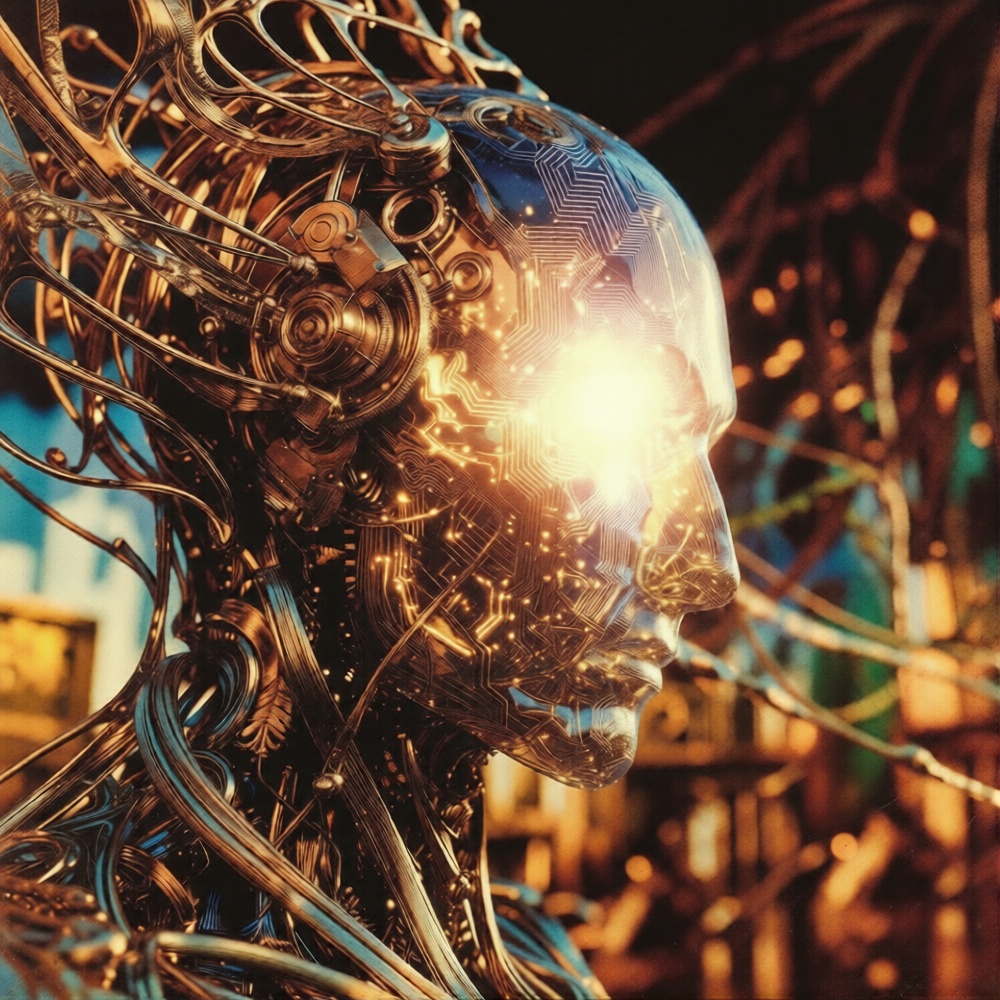
There is a moment in the life of every transformative technology when it stops being a thing people talk about and starts being a thing people use. For AI agents, that moment is now—not cleanly or triumphantly, but unmistakably. The shift from experimentation to production is messy, incomplete, and already reshaping how work gets done.
The Year the Machines Learned to Do Things
There is a moment in the life of every transformative technology when it stops being a thing people talk about and starts being a thing people use. Not at conferences. Not in pitch decks. In the quiet, unglamorous trenches of actual work. That moment, for AI agents, is now.
Not cleanly. Not triumphantly. With all the grace of a teenager learning to drive stick. But unmistakably, irreversibly, the shift is here.
The Promise and the Reality
To understand what is happening with AI agents in 2026, you have to first understand what didn't happen in 2025. Because 2025 was supposed to be the year. Every keynote said so. Every venture capitalist with a Twitter account said so. Autonomous AI systems would transform how we work, handling complex tasks while we humans focused on the big picture. The promise was intoxicating. And then reality intervened.
Nearly 99% of enterprise developers experimented with AI agents last year. Mass adoption never materialized. The math was brutal and simple: if an agent achieves 85% accuracy per action, which sounds great, a ten-step workflow succeeds only about 20% of the time. Compounding unreliability killed the dream before it could walk. Benchmarks proved terrible at predicting real-world success. You could pass every test and still fail in production. There was no standard interface for tool integration, no "USB port" for agents. Most stayed stuck in sandbox demos, impressive to watch, useless to deploy.
So 2025 became the year of hard lessons. And 2026, slowly, painfully, is becoming the year those lessons bear fruit.
The Numbers Behind the Noise
The AI agent market is valued at roughly $7.8 billion today, projected to surge past $52 billion by 2030. Gartner predicts that 40% of enterprise applications will embed AI agents by the end of this year, up from less than 5% in 2025. IDC expects AI copilots to be woven into nearly 80% of enterprise workplace applications by year's end. The personal AI assistant market alone has grown from $3.4 billion to $4.84 billion in just twelve months.
These numbers are real. But they are also, in certain critical ways, misleading.
The Production Gap
Because the other number, the one that doesn't make it into the press releases, is this: only about 11% of enterprises have actually deployed AI agents in production. Gartner itself projects that over 40% of agentic AI projects will be scrapped by 2027, not because the models fail, but because organizations cannot figure out how to operationalize them. According to a LangChain survey of over 1,300 professionals, 57% of respondents do have agents in production. But quality remains the top barrier. A third of respondents cited it as their primary blocker. Hallucinations, inconsistent outputs, and the fundamental difficulty of managing context at scale continue to plague even the most sophisticated deployments.
The gap between experimentation and production is where the real story of 2026 lives. It is a gap littered with abandoned pilots, burned budgets, and engineering teams who learned the hard way that building a demo and building something that works in the real world are separated by a chasm wider than most people imagine.
The Integration Problem Nobody Wants to Talk About
Here is an observation that will make nobody rich and won't trend on any social platform, but is probably the single most important truth about AI agents in 2026: the bottleneck is not intelligence. It is plumbing.
Andrej Karpathy, the former Tesla and OpenAI researcher, described it with precision when he said that we have a powerful new kernel in the form of large language models, but no operating system to run it properly. We have been obsessing over the brain while ignoring the nervous system.
The Three Killers of Agent Pilots
The three killers of agent pilots are unglamorous and consistent. First, what practitioners call "Dumb RAG," the tendency to dump everything into context and hope the model sorts it out, rather than thoughtfully managing what information an agent actually needs. Second, brittle connectors: every new tool means custom code, unique data formats, authentication quirks, maintenance nightmares. Third, the polling tax. Most systems lack event-driven architecture, meaning agents waste enormous resources constantly checking whether anything has changed rather than being notified when it does.
Inference costs have dropped dramatically. Per-million-token pricing fell from $30 in early 2023 to roughly $0.10–$2.50 in February 2026, a 92% decline. That is a phase transition. But cheaper intelligence doesn't fix broken infrastructure. An agent that reasons brilliantly but can't reliably connect to your CRM, your ticketing system, your internal databases, is an agent that stays in the demo room.
This is why the most consequential development in the agent ecosystem this year might not be a model breakthrough at all. It might be the emergence of standard protocols.
The Plumbing Gets a Standard
In late 2024, Anthropic released the Model Context Protocol, or MCP, an open standard for connecting AI models to external tools. In April 2025, Google followed with the Agent-to-Agent Protocol, A2A, a standard for connecting agents to each other. Within months, both were donated to the Linux Foundation's newly established Agentic AI Foundation. The founding platinum member list reads like a Silicon Valley summit: Anthropic, OpenAI, AWS, Google, Microsoft, Cloudflare, Block, Bloomberg, PayPal, Salesforce, SAP.
Competitors agreed on common infrastructure. That almost never happens.
Standards as Infrastructure
MCP's Python and TypeScript SDKs have crossed 97 million monthly downloads. Google's A2A has secured support from over 100 enterprises. The mental model is simple enough: MCP gives your agent hands. A2A gives your agents colleagues. MCP handles how an agent talks to tools. A2A handles how agents talk to each other.
In February 2026, NIST announced the establishment of the AI Agent Standards Initiative, focusing on industry-led standards, open-source protocol development, and agent security research. Days earlier, Google Chrome 146 Canary shipped with built-in WebMCP, meaning billions of web pages could now serve directly as structured tools for AI agents.
The historical parallel that keeps surfacing in industry conversations is HTTP and TCP/IP. In the early 1990s, the internet existed but lacked the protocols to make it usable at scale. Once those protocols standardized, explosive growth followed. The agentic AI ecosystem is, by most serious accounts, at a similar inflection. And just like the early web, the current landscape is messy, fragmented, and full of competing visions that are slowly, grudgingly, converging.
The W3C AI Agent Protocol Community Group is now working toward official web standards for agent communication, with specifications expected in 2026–2027. It is, in other words, not a question of whether agent communication will be standardized. It is a question of which layers will consolidate first, and who will control the critical chokepoints.
Where Agents Actually Work Today
Strip away the hype and the fear, and what remains is a surprisingly clear picture of where AI agents are creating value right now and where they are not.
Software Development: The Vanguard
They work in software development. This is the domain where agents have achieved the most traction, the most adoption, and the most tangible impact. And the velocity is startling.
Claude Code, released in May 2025, overtook both GitHub Copilot and Cursor within eight months to become the most-used AI coding tool. Cursor's annual revenue has reportedly grown past $2 billion, doubling over three months. Its valuation has ballooned to $29.3 billion. Roughly 35% of Cursor's pull requests are now generated by agents operating on their own virtual machines. OpenAI's Codex, despite not existing during last year's surveys, already shows 60% of Cursor's usage volume.
The survey data tells a story of profound behavioral change. 95% of developers report using AI tools at least weekly. 75% use AI for half or more of their work. 56% report doing 70% or more of their engineering work with AI. Claude Code leads in overall usage, followed by chatbots and GitHub Copilot. Anthropic's Opus and Sonnet models dominate coding tasks by a wide margin, with more mentions than all other models combined.
What's shifted is not just autocomplete. It is the nature of the work. Cursor's new "Automations" system, launched in March 2026, lets agents run continuously, triggered by code changes, Slack messages, or timers. Cursor estimates it runs hundreds of automations per hour. The agents handle code review, security audits, and incident response, with PagerDuty incidents triggering agents that immediately query server logs through MCP connections. One Cursor engineering lead put it plainly: the idea of "thinking harder, spending more tokens to find harder issues, has been really valuable."
Anthropic's own engineering team provided the most dramatic proof of concept. Their internal C compiler project produced 100,000 lines of production Rust code across 2,000 sessions, at roughly $20,000 in API costs. A fraction of what human engineering would cost for equivalent work.
Expanding Domains
Software development is the vanguard. But other domains are following.
Customer service agents are maturing beyond glorified chatbots. Sierra, founded by former Salesforce co-CEO Bret Taylor and former Google hardware chief Clay Bavor, is building agents that function as long-term brand representatives with persistent memory of customer interactions. Salesforce's Agentforce 3.0 has evolved from a support tool into an operational layer that manages the entire customer lifecycle, from proactive lead sourcing to automated contract negotiations to self-healing workflows.
In IT operations, finance operations, onboarding, reconciliation, and support workflows, agents are becoming mainstream in constrained, well-governed domains. These environments tolerate human oversight, have clear boundaries, and deliver fast ROI. What we are not seeing, and will not see this year, is blanket high-autonomy agent deployment across every enterprise function. High-risk domains still require approvals, oversight, and incremental trust-building.
And then there is "physical AI," which Forrester is flagging as an area to watch: agents that coordinate robots, sensors, and supply chain systems in real time. PepsiCo is working with Siemens and NVIDIA to convert manufacturing and warehouse facilities into high-fidelity 3D digital twins, where AI agents simulate and refine system changes and catch up to 90% of potential issues before any physical modifications occur. Deloitte expects this to fundamentally change how industrial operations are managed by 2027.
The Consumer Frontier
The enterprise story is one of incremental, disciplined deployment. The consumer story is wilder, stranger, and less predictable.
In January 2026, an Austrian engineer's hobby project called OpenClaw hit 160,000 GitHub stars in weeks. It was a personal AI assistant, open source, that could run on your machine and carry out tasks through messaging apps. It went viral not because it was the most technically sophisticated thing anyone had ever built, but because it made something click for millions of people: AI agents are not abstract. They are a thing that can do your errands.
OpenAI hired OpenClaw's creator. Anthropic launched Cowork, described as "Claude Code for the rest of your work." Yesterday, literally yesterday as I write this, Anthropic announced that Claude can now use your computer to complete tasks. Open apps. Navigate browsers. Fill in spreadsheets. Export a pitch deck as a PDF and attach it to a meeting invite while you are running late.
OpenAI has fully integrated Operator into ChatGPT. What launched as a standalone web-browsing tool is now a unified agentic system. Users can ask it to brief them on upcoming client meetings based on recent news, plan and buy grocery ingredients, or analyze competitors and create slide decks. Google launched "Personal Intelligence," pulling context from across a user's Google ecosystem. Microsoft Copilot introduced autonomous background agents that work silently across the M365 stack, executing tasks while you sleep and surfacing only for final approvals.
Every major platform has shipped updates that move AI from "answer my question" to "do this task for me." By the end of 2026, 8.4 billion voice assistants will be active globally. Corporate AI assistants are expected to replace 30–40% of office administrator work.
The Reality Check
But here is the uncomfortable truth beneath these announcements: computer-use agents are still early. Anthropic itself cautions that computer use "is still early compared to Claude's ability to code or interact with text." These agents cannot yet reliably log in to sites, agree to terms of service, solve CAPTCHAs, or enter payment details. When they hit roadblocks, they hand the steering wheel back to the human. The gap between the demo video and the daily experience remains wide.
And the safety concerns are not trivial. An agent with access to your computer is an agent that can be manipulated. Prompt injection attacks, where malicious content on a webpage tricks the agent into performing unintended actions, are a real and growing threat. When agents can send emails, modify databases, execute transactions, and interact with external services, the consequences of a single mistake scale in ways that chatbot errors never could.
The Multi-Agent Future
The single-purpose agent is already becoming an artifact. Both Forrester and Gartner see 2026 as the breakthrough year for multi-agent systems, where specialized agents collaborate under central coordination. One agent qualifies leads. Another drafts personalized outreach. A third validates compliance requirements. They maintain shared context and hand off work without human intervention.
Databricks reports that multi-agent systems grew by 327% in less than four months. AWS and IBM point to orchestration layers as the critical infrastructure, comparable to what Kubernetes did for container management.
Coordination at Scale
In software development, the shift is already tangible. Claude Code's "Agent Teams" architecture lets multiple Claude sessions work as a coordinated team. One agent acts as team lead, assigning tasks and synthesizing results. Teammates communicate directly with each other, share discoveries mid-task, and operate without a central bottleneck. Cursor's agents run on isolated cloud VMs with full development environments. Devin's fully autonomous model assigns tasks that run in parallel.
The metaphor everyone reaches for is a team. A small, competent team where each member has a specialty. And the metaphor is apt, because multi-agent systems inherit all the coordination problems that human teams have, plus a set of novel ones.
Coordination overhead between agents becomes the bottleneck, not the individual model calls. Agents wait on other agents. Race conditions pop up in async pipelines. Cascading failures prove genuinely hard to reproduce in staging environments. Observability is table stakes: 89% of organizations have implemented some form of agent monitoring, and 62% have detailed tracing that allows them to inspect individual steps and tool calls. But the evaluation tooling is fragmented, benchmarks are inconsistent, and there is no industry consensus on what "good" even looks like for a complex agentic workflow.
Most teams still rely heavily on human review. Which does not scale. Which is the whole point.
The Economics of Doing Things
The cost story has changed dramatically, and the change matters more than most analyses acknowledge.
In 2023, running a sophisticated agentic workflow was a luxury. At $30 per million tokens, every agent action carried significant cost. By early 2026, per-million-token pricing has fallen to $0.10–$2.50. That is not an improvement. It is a different category of economics.
Devin dropped its pricing from $500/month to $20/month plus $2.25 per Agent Compute Unit. Claude Code operates on API pricing. Cursor offers cloud agent access in its Pro plan. The tools are no longer prohibitively expensive for startups and small teams.
From Constraint to Capability
But the real economic shift is not about token costs. It is about what happens when intelligence becomes cheap enough to apply generously.
At $30 per million tokens, you think carefully about every agent invocation. You optimize prompts. You minimize tool calls. At $0.10, you let agents think harder, try more approaches, check their own work, and iterate until they get it right. The constraint moves from "can we afford to use this?" to "can we build reliable systems around it?"
Cost concerns have dropped significantly in practitioner surveys. In LangChain's 2026 State of AI Agents report, cost is no longer the primary blocker. Falling model prices and improved efficiency have shifted attention from raw spend to making agents work well and work fast. Latency has emerged as the second biggest challenge, at 20%, reflecting the tradeoff between quality and speed for customer-facing use cases.
The Broader Economic Picture
The economic transformation also creates a new worry. McKinsey's midpoint scenario projects AI agents generating $2.9 trillion in US value by 2030, with the early wave arriving in 2026–2027. But MIT economist Daron Acemoglu warns this phase could be "so-so" unless redirected toward pro-worker tools, with limited GDP gains. The optimists see agents improving efficiency in everyday tasks, freeing humans for creativity and judgment. The skeptics see agent-exposed roles facing 66% skill obsolescence, with entry-level positions compressed as agents take on the tasks that used to train junior workers.
Both perspectives are probably right, in different sectors, at different timescales, for different people.
The "Agent Washing" Problem
Industry analysts estimate only about 130 of the thousands of claimed "AI agent" vendors are building genuinely agentic systems. The rest are rebranding existing automation, chatbots, or workflow tools with the word "agent" because that is where the venture capital is flowing.
This matters beyond marketing. It creates confusion about what agents can actually do. It poisons procurement decisions. It builds and then breaks expectations in exactly the way that causes enterprise buyers to retreat into skepticism.
A genuine AI agent reasons, plans, uses tools, takes multi-step actions, and adapts based on outcomes. It operates with some degree of autonomy. A chatbot that matches queries to canned responses and escalates to a human when confused is not an agent, no matter what the sales deck says.
What Comes Next
Here is what I think is true, after weeks of reading research, talking to practitioners, and watching the data:
The technology works. Not perfectly, not universally, but for bounded tasks with clear objectives and good data, AI agents are producing real, measurable value. The 12% of organizations that have agents in production are seeing time savings, faster process completion, reduced operational costs, and freed-up capacity for strategic work.
The infrastructure is solidifying. MCP and A2A are becoming the TCP/IP of the agent era. The protocol wars will continue, but the broad direction is toward interoperability, and the involvement of the Linux Foundation, NIST, and the W3C means this is not just a corporate initiative. It is becoming public infrastructure.
The gap between prototype and production is the defining challenge. And it is not a technology gap. It is an engineering gap, an organizational gap, a governance gap. The agents fail not because they are too advanced. They fail because they are not engineered for reality. Security reviews, compliance checks, identity management, audit trails, integration with legacy systems: these are the unsexy problems that determine whether an agent makes it out of the demo room.
The job market is shifting in ways that are complicated and not fully understood. Software developers are not being replaced. They are being transformed into orchestrators, supervisors, and taste-makers. The best developers in 2026 are the ones who can communicate intent to agents, decompose problems effectively, and judge the quality of machine-generated work. New roles are emerging: agent architects, performance engineers, oversight specialists. But the compression of entry-level roles, the narrowing of the on-ramp into technical careers, is a real and underexplored consequence.
And the safety questions are growing, not shrinking. When an agent can send emails, modify databases, execute transactions, and interact with external services, the stakes of a failure or an attack are categorically different from a chatbot giving a wrong answer. The governance frameworks have not kept pace with the capabilities. The most responsible companies are allocating 15–20% of their AI budgets to governance and risk management. The rest are spending less than 5% and hoping for the best.
The View from the Ground
There is something that gets lost in the reports and the projections and the protocol diagrams. It is the lived experience of working with these systems. The daily texture of it.
I have talked to engineers who describe the feeling of directing an AI agent as simultaneously exhilarating and uncanny. You communicate intent. The machine does the work. And then you review something that is both yours and not yours. A thing you caused but did not create. The developer's role has shifted from writing code to directing agents, from making to judging.
I have talked to operations teams who deployed customer service agents and found that the agents were better at following procedures than their human counterparts, because the agents never got tired, never got frustrated, never cut corners. And simultaneously worse, because they lacked the judgment to know when the procedure itself was wrong.
I have talked to founders who built their entire companies on the premise of agentic AI and are now watching as the big labs ship features that make their products redundant overnight. The pattern is repeating: Anthropic launches Cowork, and dozens of startups building file-management agents wake up the next morning staring at their own obsolescence.
The honest assessment, the one you won't find in the State of AI reports or the Gartner forecasts, is that 2026 is a year of productive confusion. The technology has cleared a threshold. The economics have cleared a threshold. The standards are emerging. But the organizational capability to absorb all of this, to integrate it into workflows and governance structures and career ladders and cultural norms, has not caught up.
It will. It always does. But the gap between what is possible and what is actually happening is, right now, the most important gap in technology.
The machines have learned to do things. The question that matters, the one that will define the next several years of work, economy, and society, is whether we have learned to let them.
Build with Octopus Builds
Need help turning the article into an actual system?
We design the operating model, product surface, and delivery plan behind AI systems that need to ship cleanly and keep working in production.